
Most Christian school T-shirts don’t get worn outside of spirit week. And that’s a problem.
The goal of a great school tee isn’t just visibility—it’s culture. It’s pride. It’s identity. If students, staff, and families aren’t reaching for your shirts on the weekend, something’s off. A T-shirt is one of the most powerful identity markers a school can put in the world, yet most schools treat them like a checkbox item instead of a strategic communication tool. When the tee looks generic, stiff, outdated, or overly busy, it becomes something people politely accept and quietly ignore.
But when it’s designed well? It becomes part of the community’s personality. Parents casually wear it to Target. Students throw it on for youth group or a Saturday hangout. Teachers wear it on trips. Those little moments matter. They create culture far beyond your hallways.
Before we dive into what separates the forgettable shirts from the ones people actually wear, here’s something that will help you design tees that get kept, worn, and loved—not tossed into the “maybe someday” drawer.
If you want to create shirts families genuinely reach for, the Branded Merch Playbook breaks down real design frameworks, fabric picks, typography rules, and product examples Christian schools use to create wearable, mission-forward apparel.
Get the Playbook
So let’s get practical. Christian school tees don’t need to be cheesy or loud to be meaningful. They need to feel modern, thoughtful, and mission-aligned. That’s what makes them wearable. That’s what makes your school stand out in a stack of youth sports shirts and vacation souvenirs.
Here’s what separates the shirts people wear once from the ones they wear out.
1. Faith-Forward—But Subtle
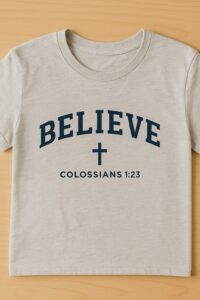
You don’t need to scream your message to stand for it. In fact, subtlety often communicates confidence. When a design feels understated and beautiful, it draws people in. A tasteful scripture reference, a school motto in a clean serif, or your cross symbol cleverly integrated into the typography can feel far more powerful than oversized block letters announcing a verse.
Subtle faith-driven design becomes conversational. People ask, “Where’s that from?” Students feel like they’re wearing something cool, not something performative. Parents feel like they can wear it to the gym or coffee shop without it looking like event merch.
This is especially true when the message connects directly to your identity. Your verse. Your mission. Your values. If you haven’t articulated those visually yet, this is your chance. A T-shirt is a storytelling platform, not a billboard.
2. Soft, Comfortable Fabric
If it’s stiff, scratchy, or boxy, it’s going straight to the back of the drawer.
Fabric is half the reason people love a shirt. You can have the world’s best design, but if it feels like cardboard, no one’s touching it. Schools often default to the cheapest option because they think it’s “just a fundraiser shirt,” but that mindset is exactly why merch fails.
Soft-wash cotton, tri-blend tees, and silky-feel fabrics create instant loyalty. They drape better, breathe better, stretch with wear, and feel good from day one. That’s the difference between a shirt someone wears three times a month and one they forget immediately.
The more wearable your shirt is, the more often it gets seen—and the more it reinforces your brand without you lifting a finger.
3. A Fit They’ll Actually Wear
Big, boxy, unflattering shirts are the fastest way to kill enthusiasm. Fit matters, even in school merch. Students care about it. Teachers care about it. Parents really care about it.
Offer:
• A classic unisex cut that flatters most body types
• Youth sizes that don’t swallow younger students
• A women’s cut option if budget allows
• A size chart that actually makes sense
When people feel good in the shirt, they wear it more often. And the more they wear it, the more your message spreads.
A note on brands:
• Gildan is the dependable, all-around option—budget-friendly but solid.
• Bella+Canvas is the “everyone loves this shirt” option—extremely soft and modern.
If you can swing Bella+Canvas, do it. If budget forces a downgrade, at least choose ringspun cotton, not classic heavy cotton.
What Great Christian School Shirts Have in Common
After working with schools all over the country, the shirts that get worn to death share several traits.
Minimalist design.
Simple typography. Clean lines. Strategic use of white space. Less is always more.
One hero concept.
Not five competing ideas. Not cross + verse + mascot + mountain + dove + shield. Pick one narrative and commit.
Mission-forward language.
Short, punchy statements like “Formed in Truth” or “Rooted and Ready” outperform long slogans every time.
A color story that fits your school.
Navy, charcoal, bone, forest, maroon—rich, wearable colors that pair well with jeans and leggings.
Print quality that lasts.
Water-based ink or discharge prints feel softer and age better than thick plastisol.
What Makes People Actually Wear Your Shirts
You can’t force people to wear school merch. But you can design something they want to reach for.
Here’s what increases wearability:
Emotional resonance.
If the shirt reflects the mission families care about, they’ll wear it proudly.
Weekend-friendly style.
It should pass the “Would I wear this out on Saturday?” test.
Consistency across drops.
When your school finds a design language that works, stick with it. Build brand recognition.
Alignment with generational taste.
Students don’t want heavy graphic tees. Parents don’t want childish fonts. Aim for modern and timeless.
The Five Biggest Mistakes Christian Schools Make With T-Shirts
Here are the pitfalls to avoid if you want your shirts to actually get worn:
1. Overdesigning.
Too many elements crammed into one space.
2. Ignoring fabric quality.
Cheap shirts cost you more in reputation than they save in budget.
3. Treating shirts like fundraising-only items.
Wearability generates far more revenue over time than high-margin one-offs.
4. Using outdated clip-art.
Stock icons are the fastest way to make your brand feel generic.
5. Forgetting your mission.
Families don’t love designs—they love meaning. Give them meaning.
Why This Matters for Christian Schools in Particular
Your apparel isn’t just apparel. It’s formation. It’s messaging. It’s your distinctives made visible in everyday life.
When your shirts feel modern and intentional:
• Students feel proud
• Parents feel connected
• Staff feel unified
• Prospective families notice
• Alumni reconnect
A great shirt becomes a quiet ambassador for your school’s identity and values.
Want to see what makes merch actually worth wearing?
👉 Read why most Christian school swag falls flat—and how to fix it.








0 Comments