
Want to open a merch store for your school, nonprofit, or business—but overwhelmed by the logistics? You’re not alone.
Every week we hear from principals, pastors, admins, PTO leaders, and small business teams who swear they’re going to “finally launch a store this semester” only to get buried in the details. Between product selection, design decisions, budget constraints, and the inevitable tech setup… the whole project gets shoved to the side. Months pass. Someone whispers “spirit wear?” in a meeting and everyone collectively groans.
But here’s the truth: merch stores don’t fail because people aren’t interested. They fail because the setup is chaotic and the vision is unclear. When you fix the strategy, the store works. It generates excitement. It builds brand pride. And yes—it can meaningfully fundraise without nickel-and-diming your families.
Here’s how to launch one that *actually* works—without burning out your admin team in the process, and without ending up with 42 boxes of leftover shirts in your storage closet.
Before you go further: if you want a walkthrough of the exact products, designs, and launch psychology behind successful merch stores, the Branded Merch Playbook breaks it all down with real examples your team can copy.
Get the PlaybookStep 1: Define the Goal of Your Store
Every successful merch store starts with clarity—because not all stores serve the same purpose.
Is your store for fundraising? Culture-building? New student onboarding? Parent engagement? Staff morale? Recruitment?
Your goal should guide every decision you make afterward. A fundraising store needs higher margins and evergreen items. A culture-building store focuses on design and wearability. A new-student store should feature welcome kits and brand-first essentials.
If you mix goals, you’ll mix the messaging—and mixed messaging kills momentum.
Start here: Why Most Spirit Wear Stores Fail (and How Christian Schools Can Do Better)
Step 2: Choose 5–8 Core Products
This is where most schools, churches, and nonprofits get it wrong. They add everything they can think of—from socks to stickers to polos to backpacks to onesies—and suddenly families feel overwhelmed.
Too many choices leads to confusion. And confusion always kills conversions.
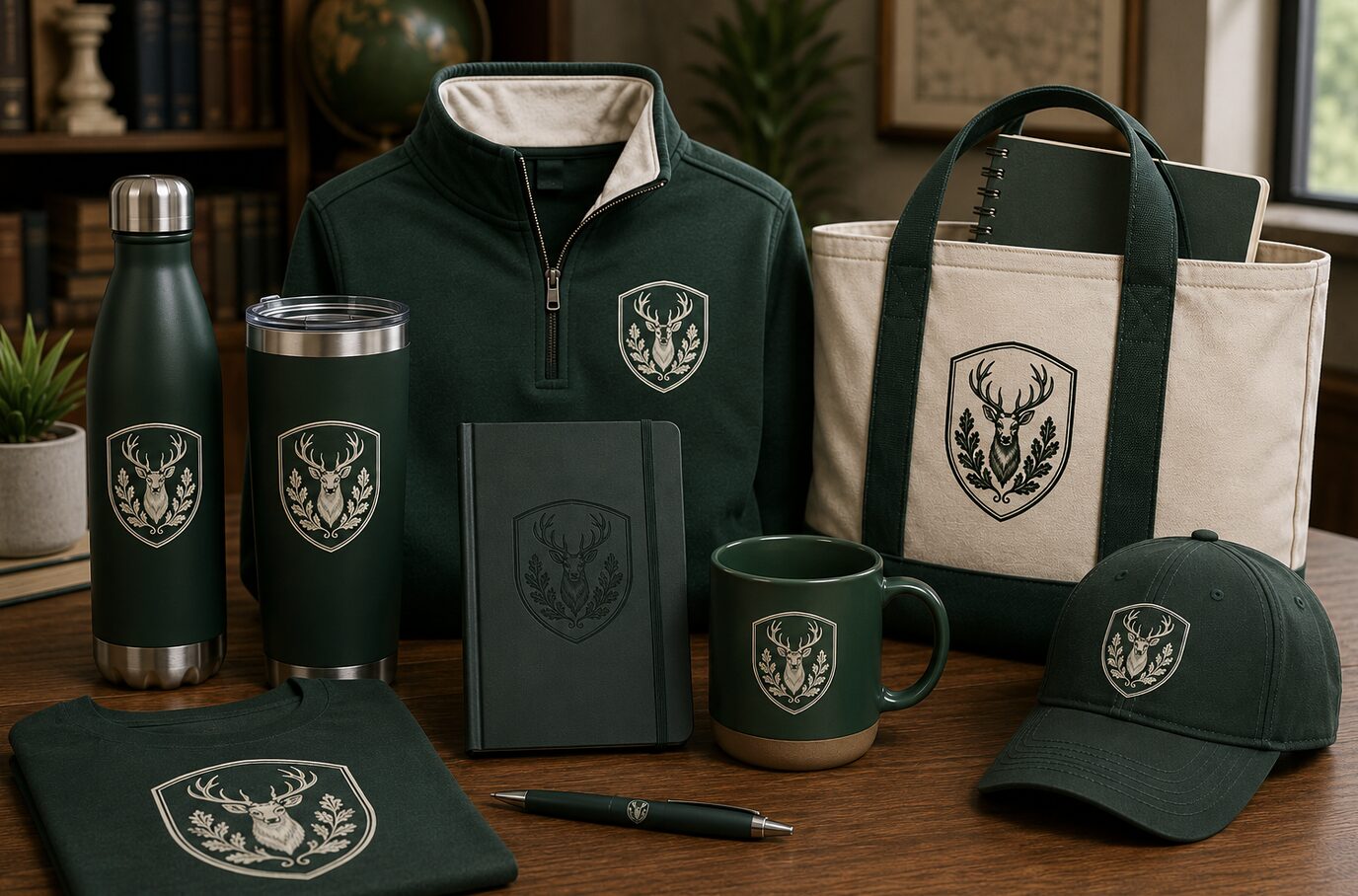
Start with a curated lineup of best-sellers. These are high-margin, high-use items that people actually want:
- Hoodie or crewneck sweatshirt
- Branded water bottle or tumbler
- PE shirt or spirit tee
- Vinyl decal or car magnet
- Hat or beanie
A small lineup means you can focus on quality, design, and messaging. Plus, it’s easier to promote. Parents don’t want to browse a catalogue—they want one or two things they instantly love.
See the top 5 merch items that actually sell →

Step 3: Set Pricing and Fundraising Strategy
This is where you turn “cute merch shop” into an actual revenue stream.
Don’t just mark everything up $5 and hope it adds up. Build a smart pricing structure that balances value, quality, and profit. Your school families will pay more for high-quality, thoughtfully designed items—but they *won’t* pay more for generic, cheap-feeling shirts.
To price properly:
- Know your cost per item (including printing, shipping, and taxes)
- Add margin based on item type (apparel vs. accessories)
- Round up to clean numbers for simplicity and confidence
The better your designs, the better your margins. People will happily pay $35–45 for a hoodie that feels good and looks great.
Read: How to plan your merch budget strategically →
Step 4: Design With Intention
This is the step that separates successful stores from the ones that flop halfway through the semester.
Most merch dies because the design feels generic. Parents aren’t buying something because it has the school’s name. They’re buying something because it looks good. Same for nonprofits and businesses—people want merch they’d wear out in public.
A winning design is:
- Mission-aligned (you can tell who you are instantly)
- Modern and clean (think minimal, not clipart)
- Subtle (not overly busy or loud)
If your merch could belong to any school, any nonprofit, any brand—it’s not merch. It’s just stuff.

Step 5: Promote It Like an Event
This is the most underrated part of launching a merch store.
A store doesn’t succeed because it exists. It succeeds because it’s promoted *well*. Your launch needs to feel like an event, not an afterthought.
Here’s how:
- Launch with a countdown (3 days, 2 days, 1 day)
- Send emails with previews and pricing
- Use urgency—your store needs a close date
- Post visuals (mockups, reels, real photos) on social
Urgency is not manipulative—it’s the difference between “I’ll look later” and “I don’t want to miss this.” People act when they know action matters.
Step 6: Decide Who’s Managing It
This is the step that turns excited admin teams into exhausted admin teams.
Running a store means:
• Tracking orders
• Answering parent questions
• Designing mockups
• Managing fulfillment
• Handling returns
• Responding to size issues
• Packaging items
• Shipping items
• Communicating delays
For one person, it’s too much. For a team, it drains time that should be spent elsewhere.
Good news: You don’t have to do it alone.
We build and manage merch stores for Christian schools, nonprofits, and small businesses that want to look professional without doing the grunt work.
That means we build:
• The website
• The ecommerce shop
• The payment system
• The product lineup
• The mockups
• The fulfillment pipeline
All you do is tell your people it exists and wait for the revenue to land in your account.
Ready to launch your merch store?
We’ll handle the designs, products, fulfillment, and setup.
👉 Book a merch consult at BRND.agency






0 Comments