
Why Local Advertising Feels Harder Than It Should
Local advertising sounds simple on paper. You show up, people see you, and over time your name becomes familiar enough that they call when they need an agent.
In reality, it rarely plays out that cleanly.
Digital ads get skipped. Mailers get tossed. Social posts get buried under everything else competing for attention. Even when you are consistent, it can feel like you are constantly starting over with new people who have never heard of you.
That is where physical presence changes the game.
Merch does something most local advertising cannot. It stays in the environment. It shows up repeatedly without asking for attention every single time.
What Makes Merch Different From Traditional Ads
Traditional ads interrupt. Merch integrates.
That difference shapes how people respond.
An ad asks for attention right now. It needs to be noticed, processed, and remembered in a short window. Most of the time, that window is missed.
Merch operates on a slower timeline. It does not demand attention. It sits quietly in someone’s space, showing up again and again in small, almost unnoticed ways.
That repetition builds familiarity without friction.
The twist is that not all merch works this way. Only the items that people actually use or keep have this effect. Everything else behaves like a flyer in disguise.
Before You Treat Merch Like Another Marketing Expense
It is easy to think of merch as just another line item in a marketing budget. Order items, distribute them, hope something sticks.
A better approach is to treat it as a system.
The Branded Merch Playbook breaks down how to choose items that people keep, how to avoid the usual throwaway products, and how to align your selections with your brand identity. It also includes real examples and pricing context so you can make decisions that hold up over time instead of guessing what might work.
Get the PlaybookStarting with a system changes how merch performs. It becomes intentional instead of incidental.
Where Merch Shows Up In Daily Life
Think about the items people interact with without thinking.
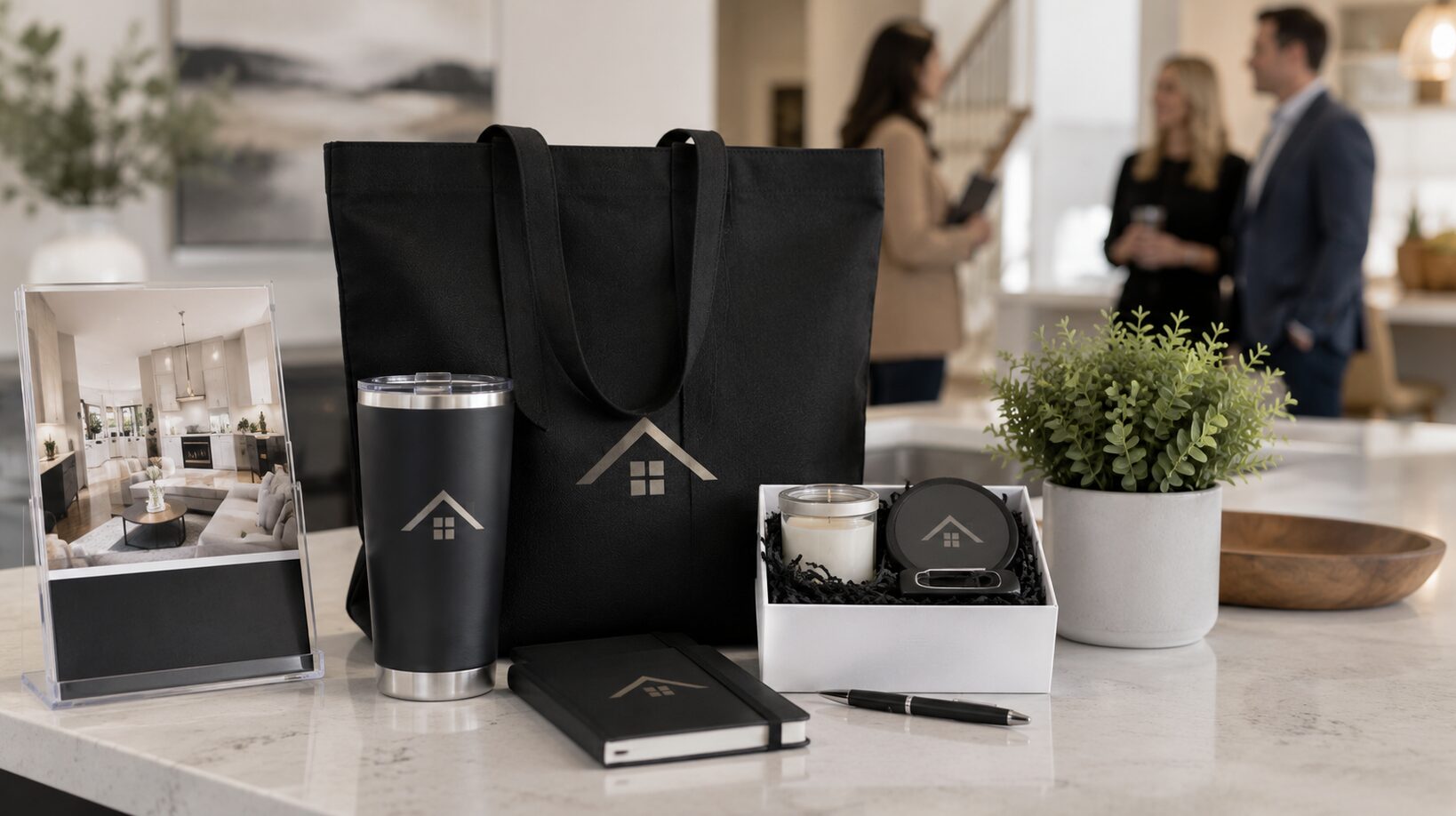
Things on their desk. Items in their kitchen. Tools they use when they leave the house. These are the touchpoints where merch has the most potential.
If your item lives in one of those spaces, it becomes part of someone’s routine. That routine creates repeated exposure, which is the foundation of local awareness.
If your item ends up in a drawer, the opportunity disappears.
This is why usefulness matters more than novelty. A clever idea might get a laugh once. A practical item earns attention over time.
Turning Clients Into Walking Awareness
There is a moment when merch moves beyond the individual and into the broader community.
When someone uses an item outside their home, it becomes visible to others. A bag at the grocery store. An item at a local event. Something that shows up in shared spaces.
That visibility creates a different kind of advertising.
It is not targeted. It is not trackable in the usual sense. It is ambient. Your brand appears in the background of everyday life, building recognition without forcing it.
Over time, that presence compounds.
The Role Of Subtle Branding
Loud branding works in some contexts. Merch is not one of them.
If an item feels like an advertisement, people are less likely to use it in public. That limits its reach.
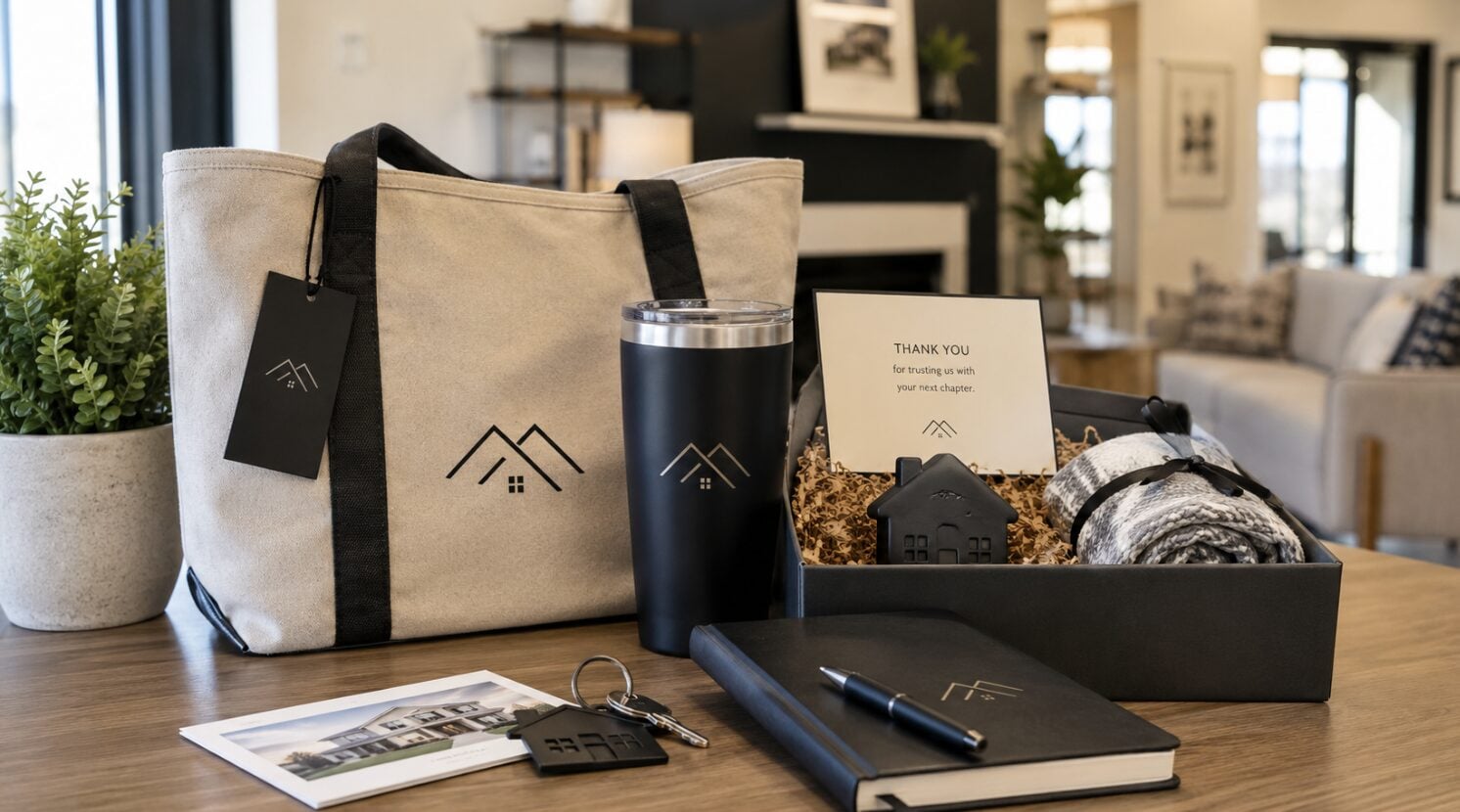
Subtle branding keeps the item usable. A clean logo, a restrained design, something that fits into everyday settings without standing out for the wrong reasons.
The goal is not to make the branding invisible. It is to make it feel natural.
When people are comfortable using the item, your brand travels further.
Local Relevance Beats Generic Ideas
Generic merch blends in. Local relevance stands out.
Items that connect to the area, the lifestyle, or the specific community create a stronger impression. They feel more thoughtful and less mass-produced.
This does not require customization for every neighborhood. It requires awareness. Understanding what fits the local environment and what people are likely to use.
When the item makes sense in context, it becomes more than a giveaway. It becomes part of how people experience your brand.
Consistency Creates Recognition
One item will not build a brand.
Consistency does.
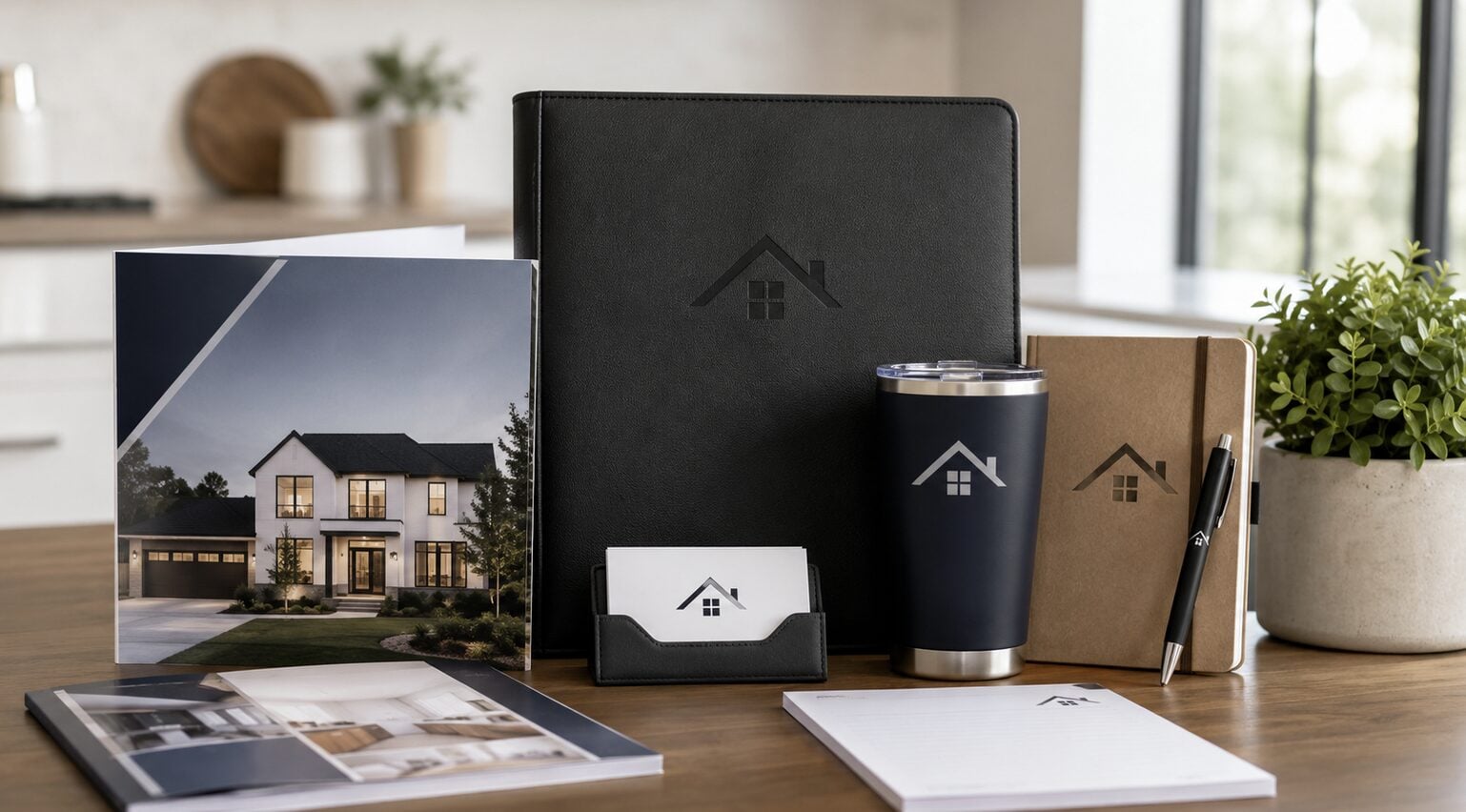
When your merch follows a clear design language, people begin to recognize it even before they read the logo. Colors, materials, and overall style create a visual identity that carries across different items.
That consistency reinforces your presence over time.
For a deeper look at how to build that kind of cohesion, The Ultimate Guide To Branded Merch For Realtors And Real Estate Teams outlines how different touchpoints can work together without feeling repetitive.
That alignment is what turns individual items into a recognizable system.
Using Merch Alongside Other Touchpoints
Merch works best when it is part of a broader strategy.
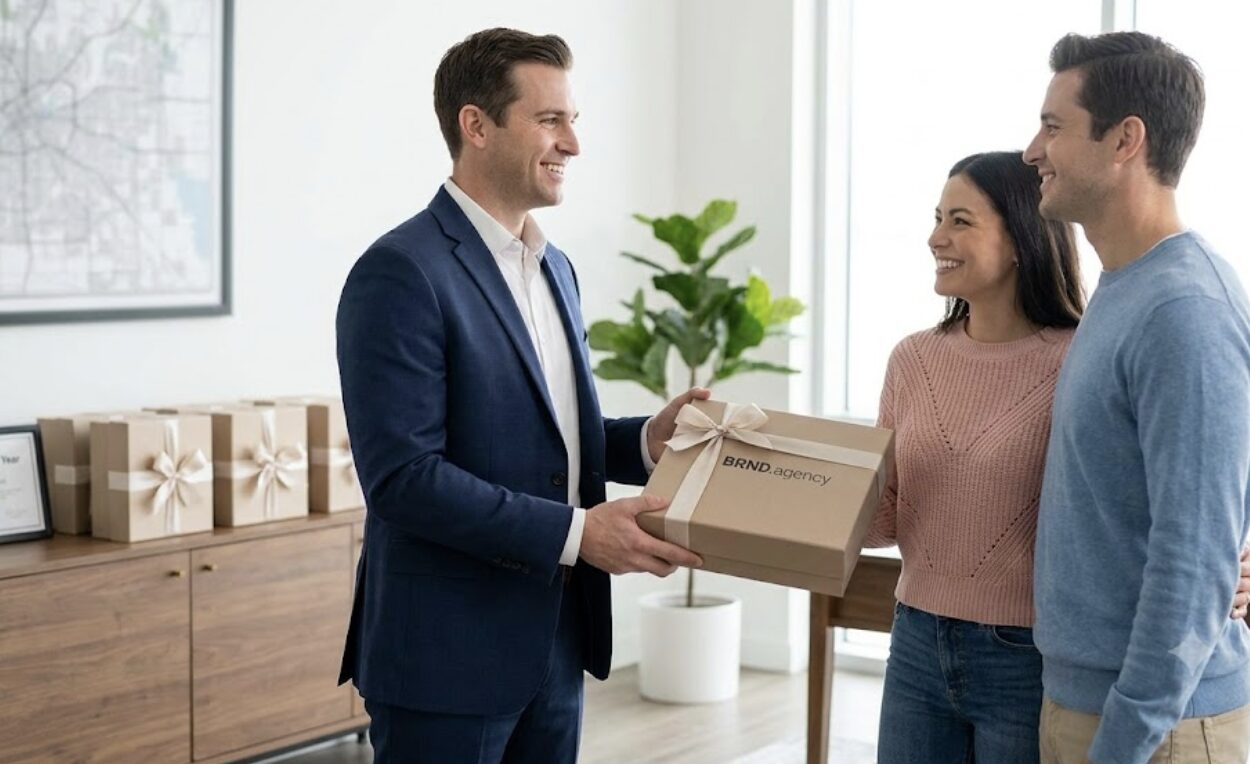
It can support open houses, pop-bys, client gifts, and community involvement. Each interaction reinforces the others. Someone sees your name online, then recognizes it on an item they have at home, then sees it again at an event.
That layering creates familiarity faster than any single channel on its own.
The key is consistency. The same visual identity, the same level of quality, and the same attention to detail across every interaction.
Measuring Impact Without Overthinking It
Merch does not lend itself to clean metrics.
You will not see a direct line from a specific item to a specific deal in most cases. That can make it feel less reliable compared to trackable channels.
Still, there are signals.
People mention your name more often. Past clients stay in touch. New clients say they have seen your brand around. These moments are easy to overlook, but they point to increased awareness.
Over time, that awareness translates into more opportunities.
Avoiding The “Box Of Leftovers” Problem
Every agent has experienced it. A shipment arrives, the items get handed out for a while, and then a box of leftovers sits in storage.
That usually means the item did not resonate.
The fix is not to give it more time. It is to adjust the selection process. Focus on items that align with how people actually live and work. Pay attention to what gets used and what gets ignored.
For practical inspiration, reviewing branded gifts for realtors can help identify options that have a higher likelihood of staying in rotation.
Learning from each round makes the next one stronger.
Why Merch Builds Trust Over Time
Trust rarely comes from a single interaction.
It builds through repeated exposure, consistent quality, and a sense that the agent is present without being intrusive.
Merch supports that process in a subtle way. It keeps your brand in the background, showing up without asking for attention. That steady presence creates familiarity, and familiarity lowers resistance.
When someone eventually needs an agent, they are more likely to choose the name that feels familiar.
Turning Everyday Objects Into Long-Term Presence
The real value of merch is not in the moment it is given.
It is in the days, weeks, and months that follow. Each time the item is used, your brand gets another small moment of attention. Not forced, not dramatic, just present.
Those moments add up.
Over time, they create a sense that you are part of the local landscape. Not just another agent running ads, but someone whose presence feels established and consistent.
That is what local advertising is supposed to do.
Merch just happens to do it in a way that people do not try to ignore.



0 Comments