
Why Merch Budgets Feel Weird In Real Estate
Real estate is one of the only industries where your marketing budget swings wildly based on deals you have not closed yet. One month you feel flush. The next month you are eyeing your coffee like it betrayed you.
That is why merch budgeting feels uncomfortable. It is physical. It shows up in boxes. It does not feel as flexible as ads you can pause or emails you can rewrite. And when merch goes wrong, it goes wrong loudly. Closets full of unused totes. Pens that skip. Shirts nobody wears outside of yard work.
The fix is not spending more. It is spending with structure.
What A Merch Budget Is Actually For
Before numbers, clarity. Your merch budget exists to do three things.
- Create memory at moments that matter
- Extend your brand into daily life
- Support referrals, retention, and recruiting
If an item does not clearly serve one of those purposes, it does not deserve budget. Period. This mindset alone cuts waste in half.
The Three Merch Buckets Every Realtor Needs
Whether you are a solo agent or running a team, merch spending falls into three buckets. Ignore this and you end up with chaos.
Handshake Merch
This is high-volume, low-cost merch. Open houses. Community events. Casual touchpoints. The goal is not forever. The goal is pleasant and useful.
Examples:
- Quality pens
- Small notepads
- Cleanly designed hand sanitizer
Relationship Merch
This is where real value lives. Items people keep and use weekly. This merch quietly reinforces your brand without shouting.
Examples:
- Notebooks with some weight to them
- Kitchen or home items that blend in
- Desk accessories that feel permanent
Signature Merch
This is reserved for closings, milestones, and moments people remember. Fewer items. Higher impact.
Examples:
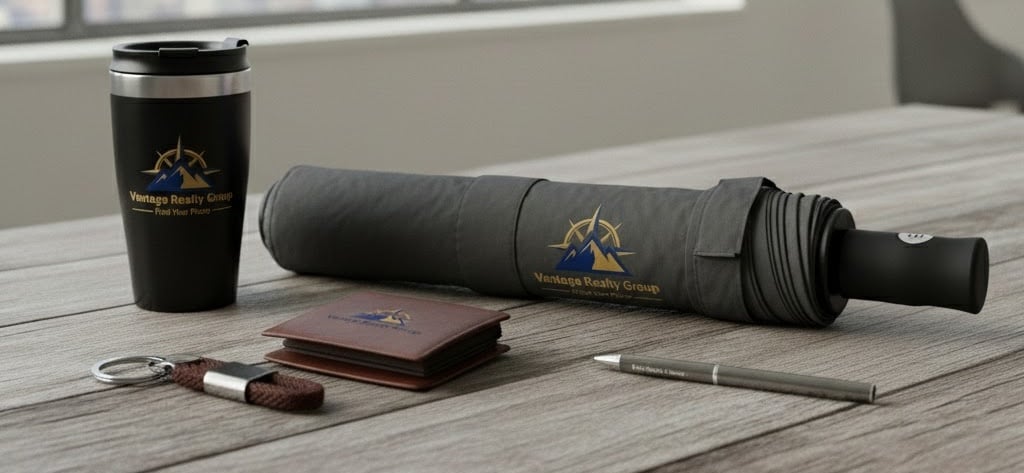
- Premium tumblers or drinkware
- Thoughtful home gifts
- High-quality apparel for teams
Every merch dollar should clearly land in one of these buckets.
The Solo Agent Budget Framework
Solo agents need restraint more than variety. You do not need 20 items. You need a tight lineup that works all year.
A simple annual framework looks like this.
- 40 percent relationship merch
- 35 percent handshake merch
- 25 percent signature merch
Why this works:
- You protect spend on items people actually keep
- You stay visible without overbuying
- You preserve flexibility for closings and surprises
If your annual merch budget is modest, resist the urge to spread it thin. Two great items beat six forgettable ones.
Before You Guess Your Numbers
If you want help choosing items that actually earn their spot in your budget, grab the Branded Merch Playbook. It walks through what people keep, what gets quietly tossed, and how to choose merch that feels intentional instead of random. You will also get pricing context so you can plan confidently without overspending.
Get the Playbook
The Team Budget Framework
Teams have a different problem. Too many use cases. Clients. Agents. Recruits. Events. Culture.
The mistake teams make is lumping everything together. Do not do that.
Split your merch budget into two lanes.
External Merch Lane
This covers clients, prospects, and partners.
Suggested split:
- 30 percent handshake merch
- 40 percent relationship merch
- 30 percent signature merch
Internal Merch Lane
This covers agents, onboarding, milestones, and culture.
Suggested split:
- 50 percent signature merch
- 30 percent relationship merch
- 20 percent event-specific items
Internal merch should feel better than client merch. Always. If your agents will not wear it proudly, you missed.
How To Set A Realistic Dollar Amount
Forget complicated formulas. Use behavior instead.
Ask these questions:
- How many meaningful client touchpoints do I want this year?
- How many closings or milestones deserve signature moments?
- How often do I recruit or onboard?
Then work backward.
If you close 20 deals a year and want a signature item at each closing, budget for 20 signature pieces. Not 40. Not someday. Reality only.
If you host 12 open houses, plan handshake merch for 12 events. Not a bulk order that lasts three years and feels dated by year two.
Price Anchors That Keep You Sane
These are not rules. They are guardrails.
- Handshake merch often lives in the low single digits per item
- Relationship merch tends to sit in the middle range
- Signature merch costs more but is ordered in smaller quantities
The trick is perceived value. A well-chosen item can feel premium without being expensive. A poorly chosen item can feel cheap no matter the cost.
If you want inspiration grounded in real-world use, browse branded gifts for realtors. It helps calibrate what feels appropriate for each budget tier.
Why Overbuying Is The Silent Budget Killer
Bulk discounts are seductive. They promise savings. They deliver clutter.
Overbuying causes:
- Stale merch that no longer fits your brand
- Storage problems nobody planned for
- Pressure to give items away just to clear space
A smaller reorder done twice often beats one giant order done once. Flexibility has value even if it is not listed on the invoice.
Seasonality And Budget Timing
Your merch budget should breathe throughout the year.
Spring and summer usually demand more handshake and relationship merch. Fall and winter lean toward signature and retention-focused items.
Do not spend everything early. Leave room.
A calm merch strategy feels boring internally and impressive externally.
Common Budget Mistakes That Hurt Results
A few strong opinions here.
- Do not spend big on items you have never tested
- Do not let vendors upsell you into confusion
- Do not chase trends that do not fit your clients
Merch is not about novelty. It is about alignment.
How To Adjust Without Starting Over
If your current merch budget feels off, you do not need a full reset.
Start here:
- Identify which items people actually keep
- Reduce or eliminate low-impact pieces
- Shift budget toward moments that create emotion
This approach compounds. Each year gets easier. Each order gets cleaner.
For a deeper strategic view that connects all of this together, revisit The Ultimate Guide To Branded Merch For Realtors And Real Estate Teams. It pairs well with this framework and helps you avoid budget whiplash.
The Feeling You Are Aiming For
The goal is not flashy merch. The goal is confidence.
You want to know:
- Why you chose each item
- Who it is for
- When it gets used
When your merch budget supports that clarity, spending feels intentional instead of stressful. That is when merch starts working for you instead of against you.





0 Comments