
Why First Impressions Inside A Team Matter More Than You Think
Joining a real estate team is a strange experience. On one hand, there is excitement about new opportunities, new listings, and the potential to grow income. On the other hand, there is uncertainty. Every team operates differently, expectations are not always clear, and new agents are quietly trying to figure out where they fit.
That first week sets the tone.
If onboarding feels disorganized or rushed, the message is subtle but clear. The team may say they value professionalism, but the experience tells a different story. New agents pick up on that quickly, even if nobody says it out loud.
When onboarding feels intentional, though, something shifts. The new agent begins to see themselves as part of a structured, thoughtful environment. They start to believe that this team knows what it is doing.
That belief becomes the foundation of culture.
The Role Of Physical Kits In A Digital Industry
Real estate has become increasingly digital. Contracts are signed electronically, listings are shared online, and communication often happens through text or email. With all that convenience, it is easy to assume onboarding should follow the same pattern.
The twist is that digital onboarding rarely creates emotional connection.
A welcome email with a few attachments does not leave much of an impression. Even a well-organized Google Drive folder feels transactional. It provides information, but it does not create a sense of belonging.
Physical onboarding kits do something different. They take the abstract idea of joining a team and turn it into something tangible. Opening a box, handling the materials, and seeing a cohesive presentation creates a moment that feels intentional.
That moment matters more than most teams expect.
What A Strong Onboarding Kit Actually Communicates
An onboarding kit is not just a collection of items. It is a signal.
It tells new agents how seriously the team takes its brand. It reflects the level of detail they can expect in daily operations. It shows whether leadership values consistency or improvisation.
A well-designed kit communicates professionalism without needing a long explanation. Clean packaging, thoughtful item selection, and cohesive branding all reinforce the idea that this is a team worth taking seriously.
Poorly assembled kits do the opposite. Random items, inconsistent branding, or low-quality materials create confusion. Instead of building confidence, they raise quiet doubts.
Start With Items That Agents Will Actually Use
One of the easiest mistakes teams make is treating onboarding kits like promotional giveaways. They fill the box with items that look interesting but serve no real purpose. Within a week, most of those items are forgotten.
A better approach starts with usefulness.
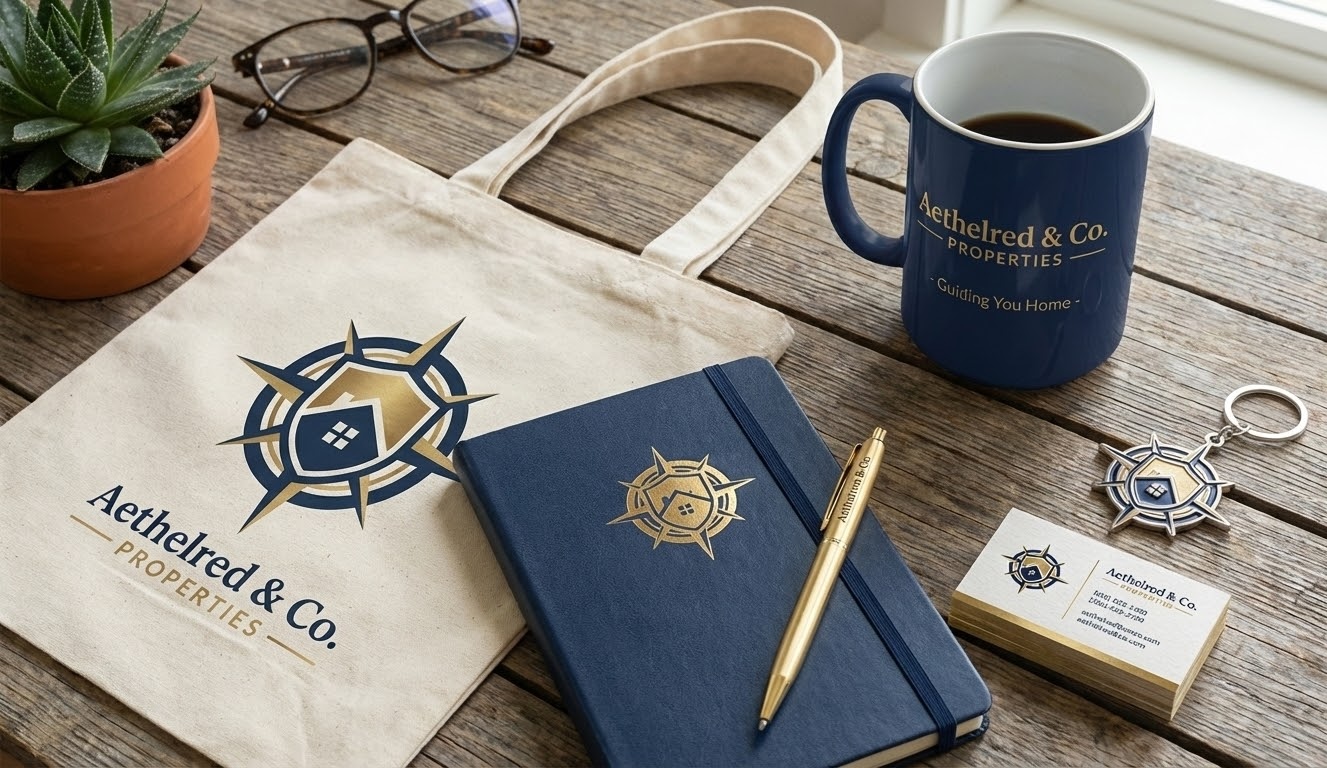
Agents need tools that support their daily workflow. High-quality notebooks, practical office items, and branded materials that feel professional can become part of their routine. When the items are used regularly, the brand remains visible in a natural way.
The Branded Merch Playbook breaks down how to choose items that people actually keep instead of things that end up in a drawer. It explains what works, what does not, and how to avoid wasting money on products that look good in a catalog but disappear in real life. It also provides pricing context and examples so teams can build kits that feel intentional without overspending.
Get the PlaybookStarting with the right items simplifies the entire onboarding experience.
Why Consistency Builds Culture Faster Than Speeches
Many teams talk about culture during onboarding. They explain values, outline expectations, and describe what makes their group different. Those conversations are important, yet they often feel abstract to a new agent.
Consistency makes those ideas real.
When every new agent receives the same high-quality onboarding kit, the experience becomes predictable. That predictability reinforces the idea that the team operates with structure and intention. Over time, these consistent touchpoints shape how agents perceive the organization.
Culture is not built through a single meeting. It develops through repeated experiences that align with what leadership claims to value.
Subtle Branding Reinforces Identity
Branding inside an onboarding kit should feel cohesive rather than overwhelming. Large logos on every item can make the kit feel promotional instead of professional. New agents are not customers, and the goal is not to advertise to them.
Subtle branding creates a stronger effect.
A consistent color palette, clean typography, and small logo placements can tie the entire kit together without making it feel cluttered. The result is a presentation that feels polished and intentional.
When agents use these items daily, the brand becomes part of their routine in a natural way.
Connecting The Kit To Real Work
An onboarding kit becomes more meaningful when it connects directly to the agent’s responsibilities. Instead of feeling like a welcome gift, it becomes a practical extension of their role.
For example, materials that support client interactions, listing preparation, or daily organization can help new agents feel prepared from the start. When the kit aligns with actual work, it reduces friction and builds confidence.
This connection also reinforces the idea that the team understands what agents need to succeed.
Learning From What Works In Client Gifting
There is an interesting overlap between onboarding kits and client gifts. Both rely on thoughtful item selection, subtle branding, and an understanding of how people use objects in their daily lives.
For teams looking to refine their approach, exploring branded gifts for realtors can provide insight into which products feel appropriate in professional and home environments. Many of the same principles apply when building onboarding kits.
When items feel relevant, they are far more likely to remain visible.
Scaling Onboarding Without Losing Quality
As teams grow, onboarding becomes more complex. New agents join more frequently, and the process needs to remain consistent without becoming overwhelming to manage.
Standardizing the kit is one of the simplest ways to maintain quality at scale. When the core items are defined and sourced reliably, the process becomes predictable. Small personal touches can still be added, but the foundation remains stable.
This balance allows teams to grow without sacrificing the experience of new agents.
Why Thoughtful Onboarding Improves Retention
Agents often decide how they feel about a team within the first few weeks. If onboarding feels chaotic or impersonal, doubts can start to form early. Those doubts do not always lead to immediate departure, but they can affect long-term commitment.
A thoughtful onboarding experience builds confidence.
When agents feel supported from the beginning, they are more likely to invest in the team’s systems and culture. They become engaged faster and develop a stronger sense of belonging.
That sense of belonging is what keeps people around.
Building A Cohesive Experience From Day One
An onboarding kit is only one part of the experience, but it sets the tone for everything that follows. It introduces the brand, demonstrates attention to detail, and provides tools that agents will use regularly.
For teams looking to build a more comprehensive approach to branding and touchpoints, The Ultimate Guide To Branded Merch For Realtors And Real Estate Teams offers a broader framework for integrating these elements across both internal and client-facing interactions.
When onboarding feels cohesive, the rest of the system becomes easier to maintain.
Culture Is Built Through Small, Consistent Signals
Real estate teams often focus on big milestones such as sales volume, new listings, or expansion into new markets. Those achievements matter, but culture is shaped by smaller signals that appear every day.
An onboarding kit is one of those signals.
It reflects how the team presents itself, how it supports new members, and how seriously it takes its own brand. Over time, these details accumulate and define the experience of being part of the team.
When done thoughtfully, onboarding kits do more than welcome new agents. They help create an environment where people feel confident, supported, and proud to represent the brand.






0 Comments