
Why Coaches Keep Overthinking A Simple Question
Every executive coach eventually hits the same fork in the road. You’ve got a client roster building, a brand that finally feels like yours, and someone asks whether you’ve thought about merch. Suddenly you’re staring at a supplier catalog full of stress balls and tri-fold notepads, wondering if any of it actually says “I charge four figures a month to help executives think clearly.” Most of it doesn’t. Some of it actively works against you.
This guide exists because branded merch for coaches gets treated like an afterthought when it should be treated like a second business card, except one that people actually keep on their desk instead of tossing in a drawer with expired gym memberships and old business cards from a conference three years ago.
The Difference Between Merch And Marketing Clutter
Here’s the thing nobody tells you when you start ordering promotional products: quantity is the enemy. A coach with three well chosen items builds more brand equity than a coach with a fifteen item catalog nobody remembers ordering. The goal isn’t coverage. It’s recall. When a client picks up your pen, notices your notebook, or reaches for the mug you gave them during onboarding, you want a flicker of recognition, not confusion about which vendor sent it.
Coaches who get this right tend to start with a short list of corporate swag ideas that hold up under actual daily use rather than whatever’s cheapest per unit at the trade show. Price per piece matters less than price per impression over the life of the item. A forty dollar journal a client uses for six months of session notes is doing more marketing work than a two dollar pen that dies in a junk drawer by March.
Get the Branded Merch Playbook. It’s a straight answer to the question every coach eventually asks: what actually earns a spot on a client’s desk versus what gets tossed the second the box is opened. Inside you’ll find real product picks, pricing ranges, and the reasoning behind what works, so you’re not guessing your way through another order.
Get the Playbook
Matching Merch To The Actual Coaching Relationship
Executive coaching isn’t retail. You’re not selling volume, you’re selling depth, and the merch should reflect that. Skip anything that screams convention swag table. Think instead about what a client would actually use between sessions, things that reinforce the work rather than just the logo. A well made notebook earns its keep because clients write down what comes up in a session and refer back to it later. A quality pen earns its keep because it becomes the default one they reach for at their desk, quietly sitting there next to your name.
Where this gets interesting is timing. Sending merch cold, before a relationship exists, feels transactional and a little desperate, honestly. Sending it as part of a structured moment, like the start of an engagement or the wrap of a successful quarter, gives the object meaning instead of making it just another piece of stuff. The item is identical either way. The context changes everything about how it lands.
Packaging Decides Whether It Feels Like A Gift Or A Freebie
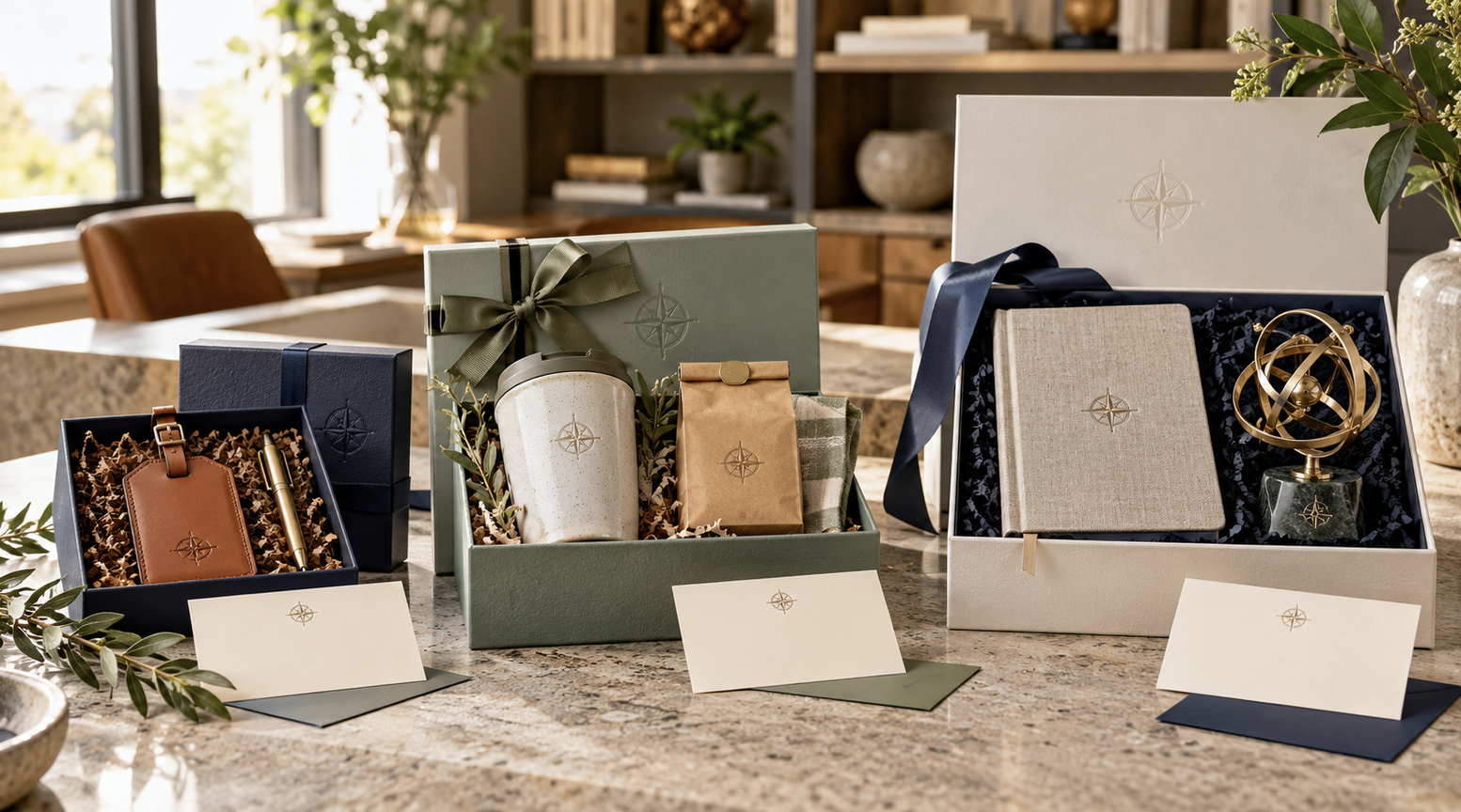
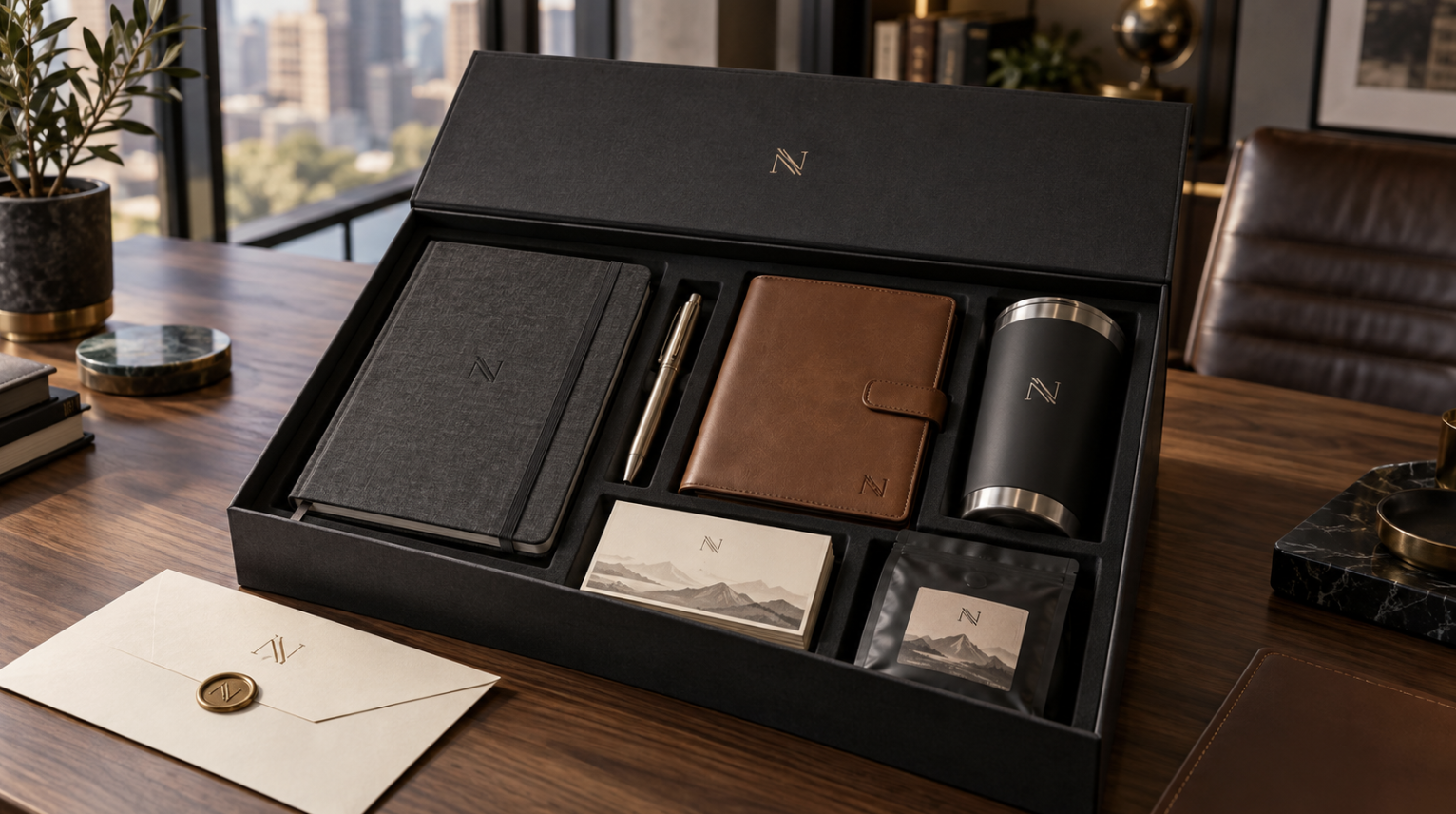
You can spend real money on a great product and still tank the impression with bad packaging. A branded mug shoved in a plain shipping box next to packing peanuts reads cheap, no matter what the mug actually cost. The same mug wrapped in tissue with a short handwritten card reads like a gift someone thought about. Coaches building an unboxing moment that feels genuinely premium understand that the two minutes a client spends opening the box are doing as much brand work as the item itself.
This doesn’t mean you need a custom die cut box with gold foil, though if that’s your budget, go for it. It means paying attention to the small stuff. Fold the tissue instead of stuffing it in. Include a note that references something specific rather than a generic thank you. Skip the plastic air pillows if you can, they photograph terribly for the client’s inevitable unboxing post, and yes, some of them will post it.
Retreats And Masterminds Are A Different Animal Entirely
If your coaching practice includes group retreats or masterminds, the merch calculus shifts. You’re no longer designing for one desk, you’re designing for a room full of people who are about to spend two or three days together and will very likely compare notes on what they got in their welcome bag. Coaches running these events lean on lessons from what actually needs to be in a retreat welcome kit because the stakes are higher and the audience is watching each other’s reactions in real time.
Group settings also create an opportunity individual client kits don’t. Matching apparel, a shared journal design, or a consistent color palette across the room builds a sense of belonging that’s hard to manufacture any other way. People bond over shared objects faster than you’d think. It’s a little bit summer camp, a little bit corporate retreat, and when it’s done well it becomes part of the story attendees tell about why the experience mattered.
Budgeting Without Guessing
A common mistake is treating merch budget like a leftover line item, whatever’s left after software subscriptions and ad spend. Flip that. Set a per client number before you start shopping, somewhere in the thirty to sixty dollar range for a standard onboarding touch, and let that number filter your options instead of falling for whatever’s on sale. Retreat kits run higher, often eighty to one hundred fifty dollars per attendee once apparel and a few premium items are involved, but the math still works because you’re spreading brand impact across a captive, engaged audience.
Track what gets used and what doesn’t. If clients mention the notebook in sessions but never bring up the water bottle, that’s data. Adjust the next order accordingly instead of assuming last year’s picks are still the right ones. Merch preferences shift, and a coach who pays attention to what’s actually resonating will always outperform one running the same static list year after year out of habit.
Where To Draw The Line On Logo Placement
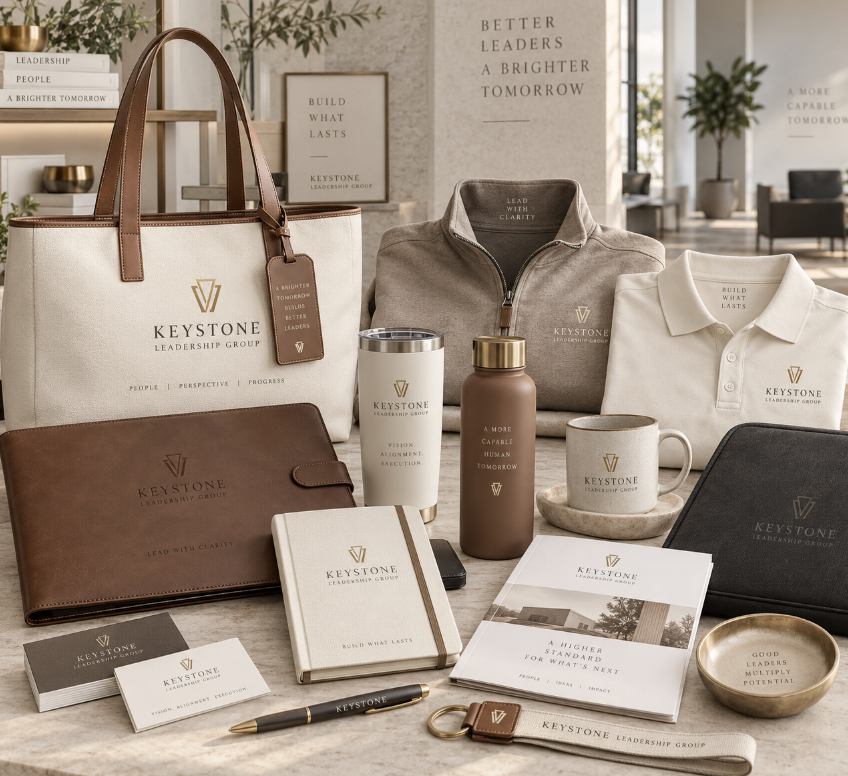
One quiet mistake that separates decent merch from great merch is restraint on branding. A giant logo slapped across the front of every item feels like walking marketing collateral, and most executives don’t want to be a billboard for your coaching practice, no matter how much they like you. A small, tasteful mark, maybe debossed on a notebook cover or subtly stitched on a collar, reads as quality. It says you trust the item to speak for itself instead of needing to shout your name across it.
The goal is for someone to notice the branding only after they’ve already decided they like the object. That order matters. Branding first makes it advertising. Quality first, with branding as a quiet signature, makes it something people actually want to keep around long after the coaching engagement wraps.
Vendors Matter More Than People Assume
Two coaches can order the exact same product from two different suppliers and end up with wildly different results. Stitching quality, print durability after a few washes, and how a notebook cover holds up after being tossed in a bag for six months all come down to who’s actually making the thing. Cheap suppliers cut corners in places clients notice fast, like ink that cracks on a hoodie after three wears or a pen that skips halfway through the first meeting. Spend a little time vetting a supplier before committing to a big order, and ask for a physical sample rather than trusting a product photo on a catalog page.
It’s also worth building a relationship with one or two reliable vendors rather than bouncing around for the lowest price every time. Consistency in quality matters more than saving a few dollars per unit, especially once you’re ordering the same core items repeatedly across a growing client list. A supplier who knows your brand guidelines and reorders correctly the first time saves you far more in headaches than a marginally cheaper option ever will.
Small Touches That Outperform Expensive Items
Not every meaningful gesture requires a big budget line. A handwritten note tucked into an otherwise simple package often gets remembered longer than the most expensive item in the box. Clients don’t forget being seen as a person rather than a line item on an invoice, and a two minute note costs nothing but attention. Pair that with one solid physical item and you’ve built something that feels considered without needing a five figure merch budget to pull off.
The coaches who do this well tend to treat merch as an extension of the relationship rather than a separate marketing function handled once a quarter. It gets folded into how they think about client experience overall, alongside how sessions are structured and how follow up happens. Once that mindset shift happens, the question stops being what merch should I buy and becomes what does this specific client need to feel supported right now, which is a much better question to be asking anyway.




0 Comments