
A Gift System Beats A Gift Impulse Every Time
Most executive coaches give gifts the way most people go to the gym in February. There’s a big burst of enthusiasm, a few thoughtful packages go out, and then six months of nothing because a client emergency ate the calendar. The gifts themselves are rarely the problem. What’s missing is a system, some repeatable structure that decides who gets what and when, so thoughtfulness doesn’t depend on whether you happened to have a quiet Thursday.
Retention in coaching is a funny thing. Clients rarely leave because the coaching got bad. They leave because the engagement quietly lost its sense of occasion, the calendar got crowded, and renewing started to feel like one more subscription to audit. A gift system gives you a handful of planned moments that remind the client why this relationship is worth keeping, and it does that without asking you to remember anything at all.
Start With The Moments, Not The Merchandise
Here’s the mistake that costs coaches the most money: they open a supplier catalog first and ask what they should buy. The smarter question is when a gift would actually matter to the client, and the answer is usually a short list of predictable moments. The day they sign, the end of the first ninety days, a real win they mention in a session, a renewal decision, and the anniversary of working together. Five moments, maybe six, and you’ve covered most of the relationship.
If that sounds familiar, it’s because other relationship driven professions have already mapped this out. A breakdown of the three moments that matter most for advisor gifting makes the same point for financial advisors, and the logic carries over cleanly to coaching. Pick the moments first, assign a gift level to each one, and the merchandise decisions get dramatically easier.
Get the Branded Merch Playbook. Before you pick a single product for your client gift system, it helps to know which items people keep using and which ones vanish into a closet by March. The playbook lays out what works, what flops, and the pricing context behind each choice, so you can order with confidence instead of guessing.
Get the Playbook
Building Tiers So You Never Overthink Again
A tiered structure is the engine of the whole thing. Think of three levels. A light touch, somewhere around fifteen to twenty five dollars, covers small moments like a milestone mentioned in passing. A standard gift, thirty five to seventy five dollars, handles the anchor moments like the ninety day mark. A premium gift, a hundred to two hundred dollars, is reserved for renewals, big wins, and flagship clients. Once those tiers exist, deciding what to send turns into a matching exercise instead of a creative project, which is a relief when you’re already juggling six clients and a keynote deck.
What Goes In Each Tier
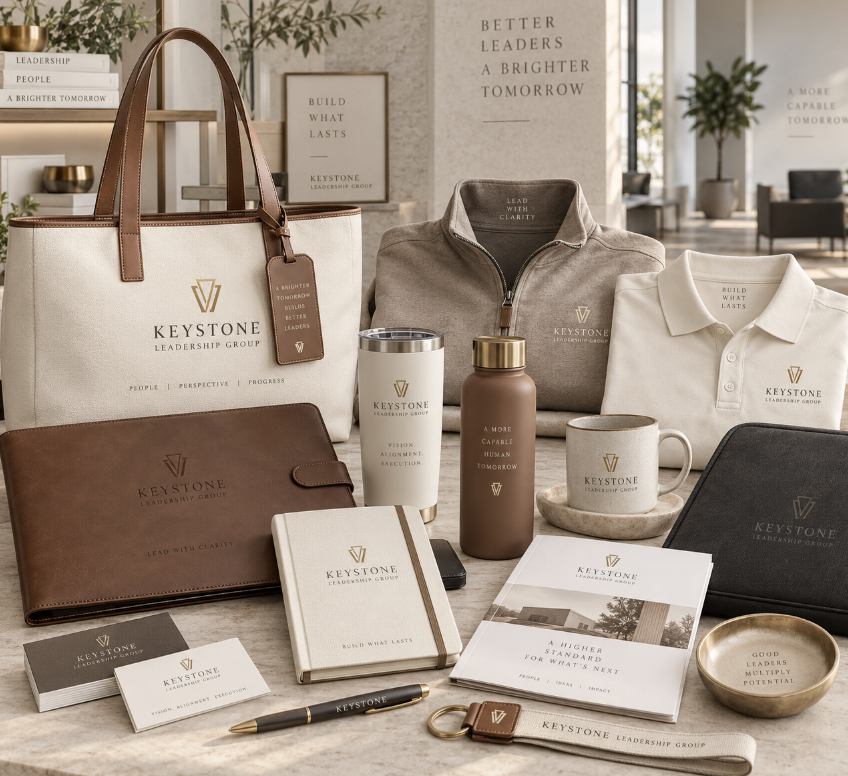
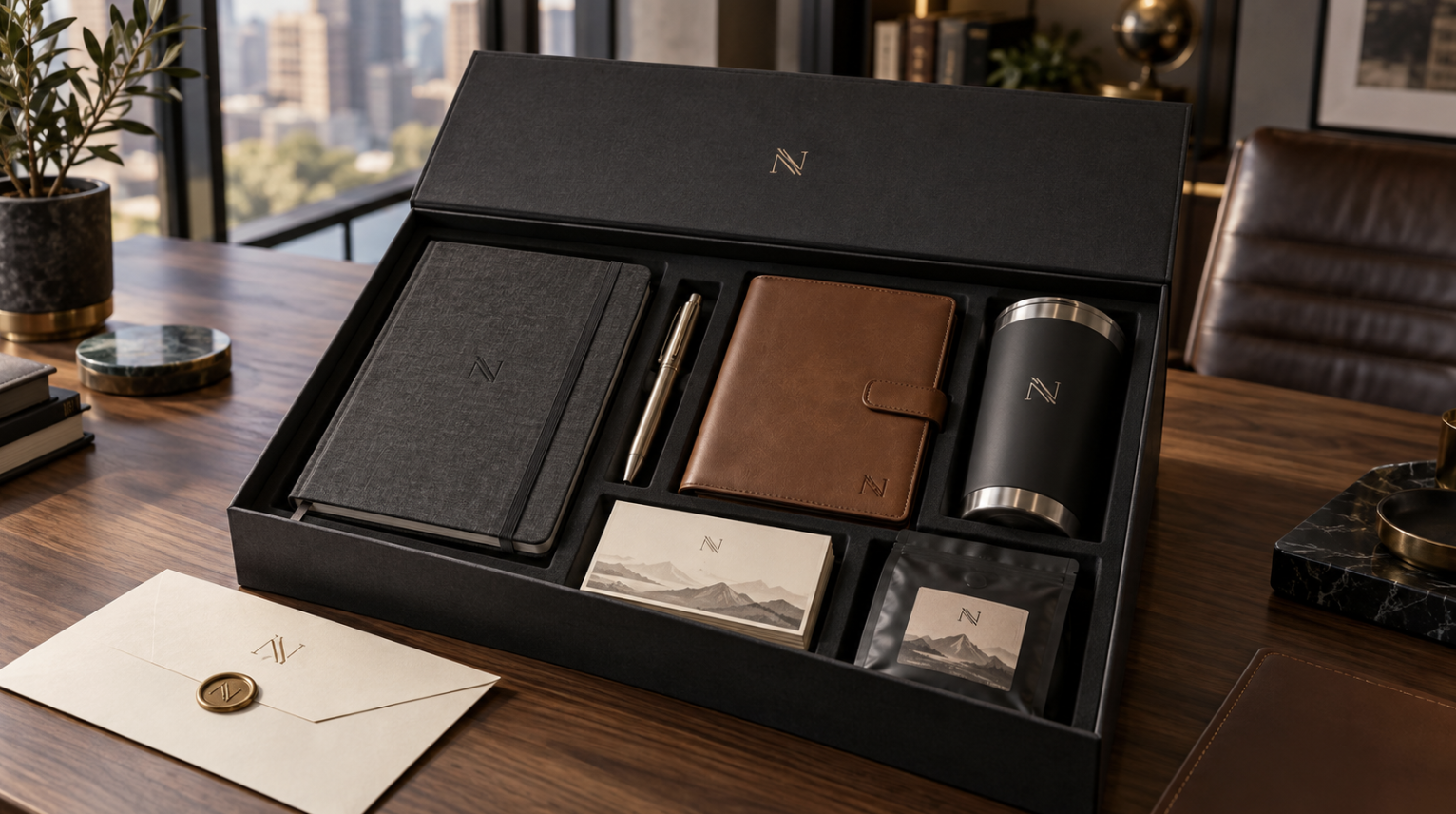
For the light touch, think consumable or small and useful. A good coffee sample, a tin of tea, a quality pen, or a paperback you actually read and loved. These are low risk and easy to personalize with a one line note. The standard tier is where branded items start to earn their keep, with a hardcover notebook with a debossed mark, a ceramic mug that doesn’t feel like a trade show leftover, or a desk accessory that suits a home office. Nothing screams logo, but everything quietly carries your name.
The premium tier is where you go for things clients would plausibly buy for themselves. A leather portfolio, a nice insulated bottle, a quality blanket for the person who takes calls from a couch at ten at night. Keep branding subtle on these, because a premium item with a giant logo reads like a vendor gift, and executives collect plenty of those every December. The goal is to be the one gift on the desk that doesn’t look like it came from a procurement department.
Gifts That Tie Directly To Retention Moments
Renewal time is the obvious test of any gift system, and it’s where most coaches wing it. A better approach is to send something three to four weeks before the renewal conversation, not as a nudge, just as a genuine thank you for the work done so far. By the time you sit down to talk about the next engagement, the client has been quietly reminded of the relationship’s value in a way that doesn’t feel like a sales tactic.
Anniversaries deserve the same attention. A year of working together is a real milestone, and clients notice when it gets acknowledged. The thinking behind anniversary gifts that build client loyalty applies neatly here, since coaching relationships, like advisory ones, run on continuity and trust built over time. A short handwritten note about how far they’ve come since the first session, paired with a tasteful item, often does more for renewal odds than a polished proposal ever will.
Tracking It Without Building A Monster
You don’t need a CRM overhaul. A simple spreadsheet with columns for client name, start date, key moments, last gift sent, tier, and a personal detail will do the job. That last column matters more than it looks. It’s where you log things like a client’s favorite coffee roast, the marathon they’re training for, or the daughter heading off to college. When gift time comes, that single line is the difference between something generic and something that makes the client text you a thank you.
Set a calendar reminder for each client’s key dates the day they sign. Thirty seconds of setup at the start saves you from the scramble later, and it removes the guilt of realizing you missed a ninety day mark by three weeks. Systems exist so your good intentions don’t depend on your memory, which for most coaches is already overbooked with other people’s problems.
Referral Gifts Deserve Their Own Lane
One piece of the system that coaches often skip entirely is the thank you for referrals. When a client introduces you to a colleague, that’s about the most valuable thing they can do, and acknowledging it quickly and warmly encourages more of the same. It doesn’t need to be extravagant, and it shouldn’t feel like a bounty. A thoughtful gift and a sincere note, sent within a few days of the introduction, tells the client you noticed and appreciated the trust they showed.
The mechanics behind this are well covered in a look at thank you kits that drive repeat referrals, which breaks down why a prompt, personal acknowledgment tends to turn one introduction into several. Add a referral level to your system, even a simple one, and you’ll turn grateful clients into a quiet sales channel without ever running a single ad.
Budgeting The Whole Year In One Sitting
Once the tiers and moments are set, do the math once and stop worrying about it. Say a client gets one standard gift at ninety days, one light touch somewhere mid year, an anniversary gift, and a premium gift at renewal. Depending on where you land inside each range, that’s roughly two hundred to four hundred dollars per client per year, against an engagement that probably brings in several thousand. Treat it as a retention line item the way you’d treat software or insurance, and review it quarterly so it never creeps up unnoticed.
Order in batches, too. Buying six notebooks at once costs less per unit than buying one six separate times, and having a small shelf of ready items means a surprise win in a session can be acknowledged within the week. The coach who can send something thoughtful three days after a client’s big announcement is remembered very differently from the one who needs a month to find a mug.
Keeping The System Human
The risk with any system is that it starts to feel mechanical, and executives have fine tuned radar for anything that smells automated. The fix is easy. Let the structure handle the when and the what, then add something unmistakably human on top, like a note that references a specific conversation or a gift that nods to something they mentioned offhandedly three sessions ago. The system makes sure you show up, and the personal detail makes sure it matters.
Start with one tier and two moments if five feels like too much. Run it for a quarter, see which gifts clients mention, and refine from there. Retention doesn’t come from one grand gesture. It comes from a steady series of small, well timed ones that tell a client, over and over, that this relationship is being tended on purpose.





0 Comments