
The Pen That Quietly Wrecks Your Brand
Picture this. A CEO just wrapped a session with you, wrote a check that could cover a mortgage payment, and you hand them a parting gift on the way out. It’s a plastic pen with your logo printed slightly crooked, the kind that comes free with a hundred dollar minimum order from a wholesale site you found at two in the morning. That pen is now the last physical thing they associate with an hour of work that just changed how they think about leadership. The math on that trade is not great.
Coaching is a premium service built almost entirely on perception before results ever get measured. Clients can’t see the ROI of better decision making in real time. What they can see, touch, and judge instantly is everything physical that comes with the relationship. That’s exactly why cheap swag does more damage in this industry than almost any other.
Why The Damage Is Bigger For Coaches Than Anyone Else
A gym can hand out a free t shirt and get away with it because the product speaks for itself once someone loses fifteen pounds. A retailer can toss in a sticker sheet and nobody thinks twice. Coaching doesn’t have that luxury. The entire offer is intangible, which means every physical touchpoint carries disproportionate weight in shaping how a client feels about the money they’re spending. When one of those touchpoints feels like an afterthought bought in bulk, it quietly plants a seed of doubt that no amount of good coaching fully erases.
This isn’t just a coaching problem either. The same pattern shows up across other trust based industries. One piece we wrote about how cheap branded items quietly damage client perception covers the exact same dynamic playing out with real estate agents, where a flimsy pen or a cracked koozie undercuts a six figure transaction the same way a bad notebook undercuts a five figure coaching retainer. The dollar amounts differ. The psychology is identical.
Get the Branded Merch Playbook. It’s a no fluff breakdown of how to pick items people genuinely keep and use instead of quietly tossing, complete with real product examples and pricing so you’re not stuck guessing what’s worth the spend.
Get the Playbook
Cheap Doesn’t Always Mean What You Think It Means
Here’s where a lot of coaches get confused. Cheap isn’t about the dollar amount you spent. It’s about what the item communicates regardless of price. You can drop real money on a hundred branded tumblers and still end up with something that reads cheap if the print is off center or the material feels flimsy in hand. Meanwhile a five dollar candle in a nicely designed box can read expensive because someone clearly thought about the presentation. Perception is doing all the work here, not the invoice total.
The twist? Most coaches overcorrect in the wrong direction once they realize this. They assume the fix is spending more, so they order the fanciest leather portfolio they can find and call it a day. Price alone won’t save a bad gifting strategy any more than cheapness will sink a thoughtful one. What actually matters is whether the item, the timing, and the presentation all line up with the caliber of client you’re trying to attract and keep.
What Cheap Swag Actually Signals To A Premium Client
Executives who hire coaches are, almost by definition, people who make judgment calls professionally. They evaluate vendors, hire agencies, and sit through pitch decks constantly. A cheap, generic gift tells that person, without a single word being said, that you either don’t have the eye for quality they expect or you don’t think they’re worth the extra effort. Neither read is good, and neither is fair to how much thought you probably put into the actual coaching program.
There’s a real cost hiding underneath the surface too. We laid this out in more detail in a piece about the hidden cost of cutting corners on branded items, and the core idea transfers cleanly to coaching. Cheap swag doesn’t just fail to help your brand. It actively works against the premium positioning you’ve spent years building through your actual expertise, your case studies, and your reputation in whatever niche you coach in.
The Fix Isn’t Complicated, It’s Just Ignored
Most coaches know all of this on some level and still order the cheap stuff anyway, usually because it’s easier and the deadline for a new client kit snuck up on them again. Fixing this doesn’t require a total overhaul. It requires picking two or three items, sourcing them from a supplier who won’t cut corners on print quality or material, and being willing to spend closer to forty or fifty dollars per client instead of six. That’s not a budget problem for most coaching practices. It’s a priorities problem.
Honestly, some of the worst offenders aren’t even cheap on paper. We’ve seen coaches spend real money on merch that still manages to look and feel like garbage, which is its own special kind of frustrating because the intent was right and the execution completely missed. One of our older posts, bluntly titled why most branded swag ends up being crap, digs into exactly how well meaning budgets get wasted on the wrong products, and it applies just as much to a coaching practice as it does to any other business handing out branded items.
Building A Standard You Won’t Second Guess
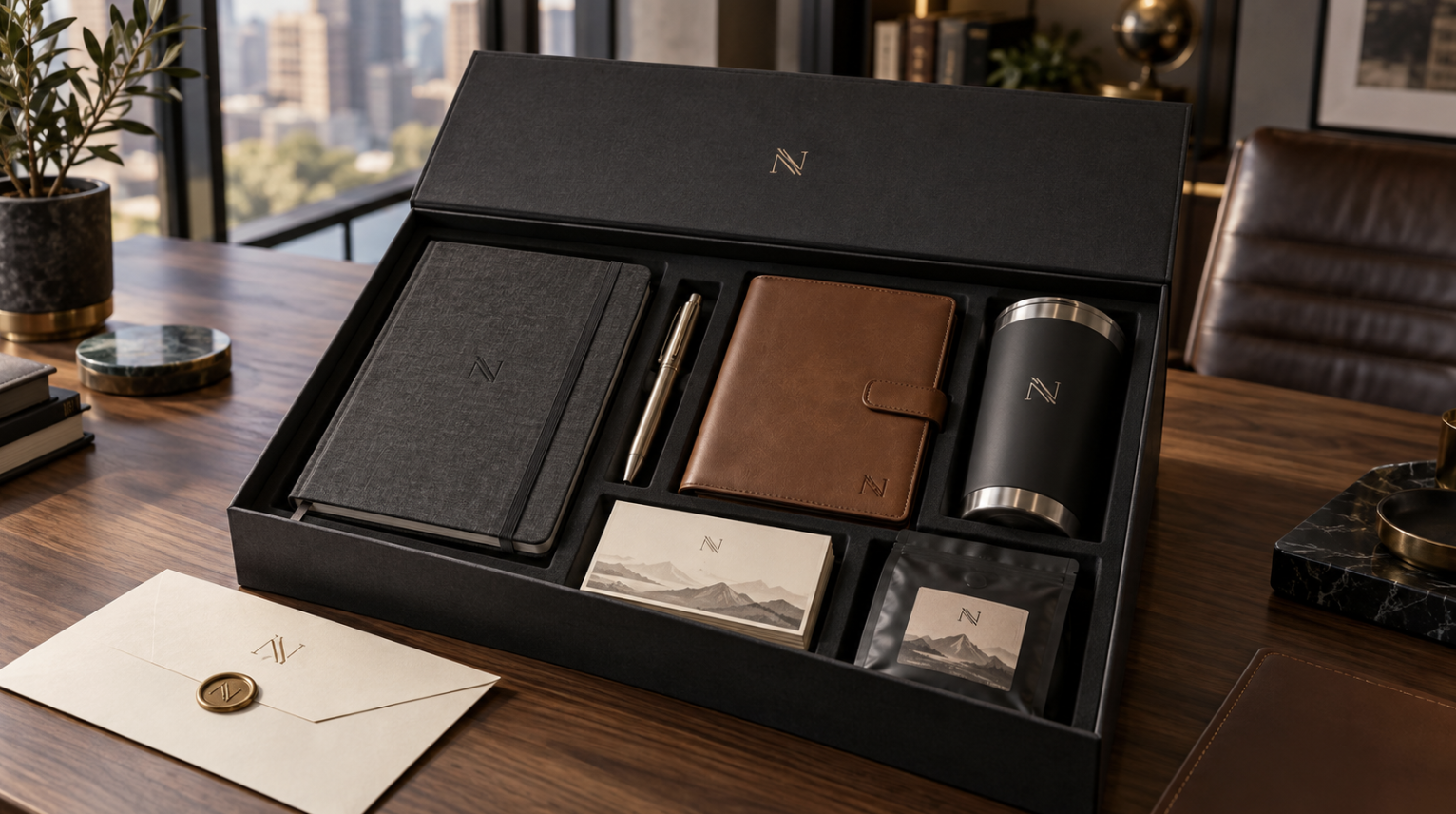
The move that actually works is setting a standard once and sticking to it, rather than reevaluating from scratch every time a new client signs. Pick a core kit, a notebook, a pen, maybe a candle or a mug depending on your brand, and make sure every single piece meets the bar you’d want sitting on your own desk. If you wouldn’t be proud to have it visible during your own Zoom calls, it doesn’t go in the box.
Test the items yourself before you commit to a bulk order. Write with the pen for a week. See if the mug survives a dishwasher cycle without the print peeling. These are small checks, but they’re the difference between a kit that quietly reinforces your positioning every time a client glances at it and one that undercuts a message you’ve spent years building through actual client results.
The Long Game Behind A Small Decision
None of this is really about the swag itself. It’s about consistency between what you charge and what you send. A five thousand dollar coaching engagement paired with a two dollar pen creates a gap the client feels even if they can’t articulate why. Close that gap and the physical touchpoints start reinforcing the value proposition instead of quietly chipping away at it every time a client reaches for a pen that skips or a mug that chips after two washes.
Clients notice more than coaches give them credit for. They might not mention the cheap pen out loud, but it registers, and it colors how they think about everything else in the relationship, fairly or not. Getting this piece right costs a little more upfront and saves you from a slow leak in credibility that’s much harder to patch once a client’s already formed an opinion.






0 Comments