You walk into a potential seller’s home. They’re nervous, they’ve already talked to two other agents, and they’re sizing you up from the second you ring the doorbell. You have roughly ninety seconds before they’ve made up their mind about you — and that’s not even a little bit of an exaggeration. The way you show up physically, visually, and professionally in those first moments tells them everything they need to know about how you’ll market their home. So the question isn’t whether you should have a listing appointment kit. The question is whether yours is doing any work for you.
Most aren’t. Most realtors walk in with a laptop, a printed CMA they got from the office printer an hour ago, and maybe a folder they’ve had since 2019. Which is fine — except the agents winning those listings aren’t doing that. They’re showing up with a kit that feels intentional, curated, and premium. There’s a tangible difference, and sellers feel it before you say a single word about your marketing strategy.
Here’s what should actually be in your listing appointment kit, piece by piece.
Before we get into specifics: if you’re going to put physical branded pieces in front of a seller, they need to look good. Cheap materials undercut everything. If you want a shortcut on figuring out which branded items are actually worth your money — and which ones end up in a junk drawer — grab the Branded Merch Playbook. It walks you through what works, what doesn’t, and why, with real product picks and pricing context so you’re not guessing.
Get the PlaybookA Branded Presentation Folder (Not a Generic One)
This is your first physical touchpoint, and it sets the tone for the whole appointment. A custom-printed presentation folder with your logo, brand colors, and a clean layout immediately communicates that you take your business seriously. Think thick card stock, a matte or soft-touch finish, and a design that matches your other marketing materials. It doesn’t need to be flashy — it needs to look like it belongs on a coffee table in the kind of home you’re there to list. Inside, you’ll organize your pre-listing packet, your bio, your marketing overview, and your CMA so the seller can follow along and take it home afterward.
Your Pre-Listing Packet
This is the substance inside that folder, and it should be comprehensive without being overwhelming. A good pre-listing packet includes a brief overview of the local market, your recent sold listings in the area, your marketing plan for their specific home (social, MLS, professional photography, print, open house strategy), and a clear explanation of your process from listing to close. The packet positions you as knowledgeable before you’ve even answered a single question. Sellers who are interviewing multiple agents will absolutely compare these — and a polished, branded packet versus a stapled stack of printouts is not even a fair fight.
A Printed CMA, Formatted for Humans
Your comparative market analysis needs to be something a normal person can read and understand. Pull it from your MLS system, yes, but then format it. Use a clean layout, highlight the key comps, add a brief written summary at the top, and put it in a report sleeve or a dedicated branded section of your folder. Sellers want to feel informed, not confused. The agent who makes them feel smart wins. If your CMA looks like a raw data export, you’re giving them homework when you should be giving them confidence.
Your Personal Bio Card or One-Sheet
A single-page, well-designed bio does something your elevator pitch can’t — it gives them something to look at while you’re talking, and something to hand to their spouse later when they’re debriefing. Include your sales stats, your market knowledge, a professional photo, and two or three client testimonials. If you work a specific neighborhood or niche, this is the place to make that clear. For ideas on branded pieces that make realtors look the part, there’s some genuinely useful real-world context worth looking at before you finalize what you’re printing.
A Branded Notepad
Bring a custom notepad with your logo and contact info and use it during the appointment. Take notes in front of them. Write down the seller’s timeline, their concerns, what they love most about the house, what they’re nervous about. This does two things: it signals that you’re listening, and it leaves them with a physical impression of your attention to detail. When the appointment ends, tear off that sheet and leave it with them inside the folder so they have a record of what was discussed. A branded notepad runs anywhere from $3 to $8 per piece depending on quantity — which is absurdly cheap compared to what you’re trying to earn.
A Leave-Behind Gift That Stays in the House
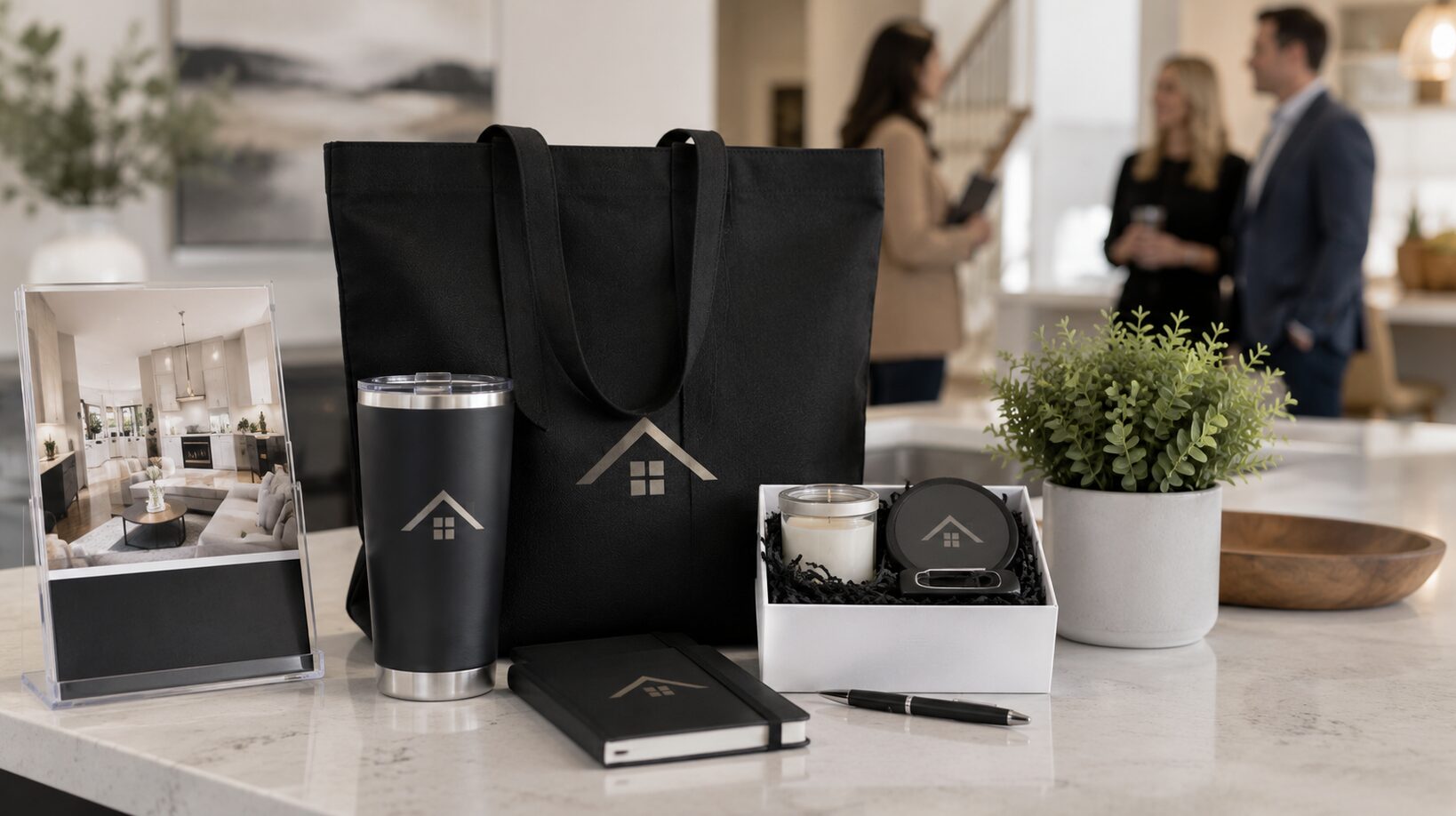
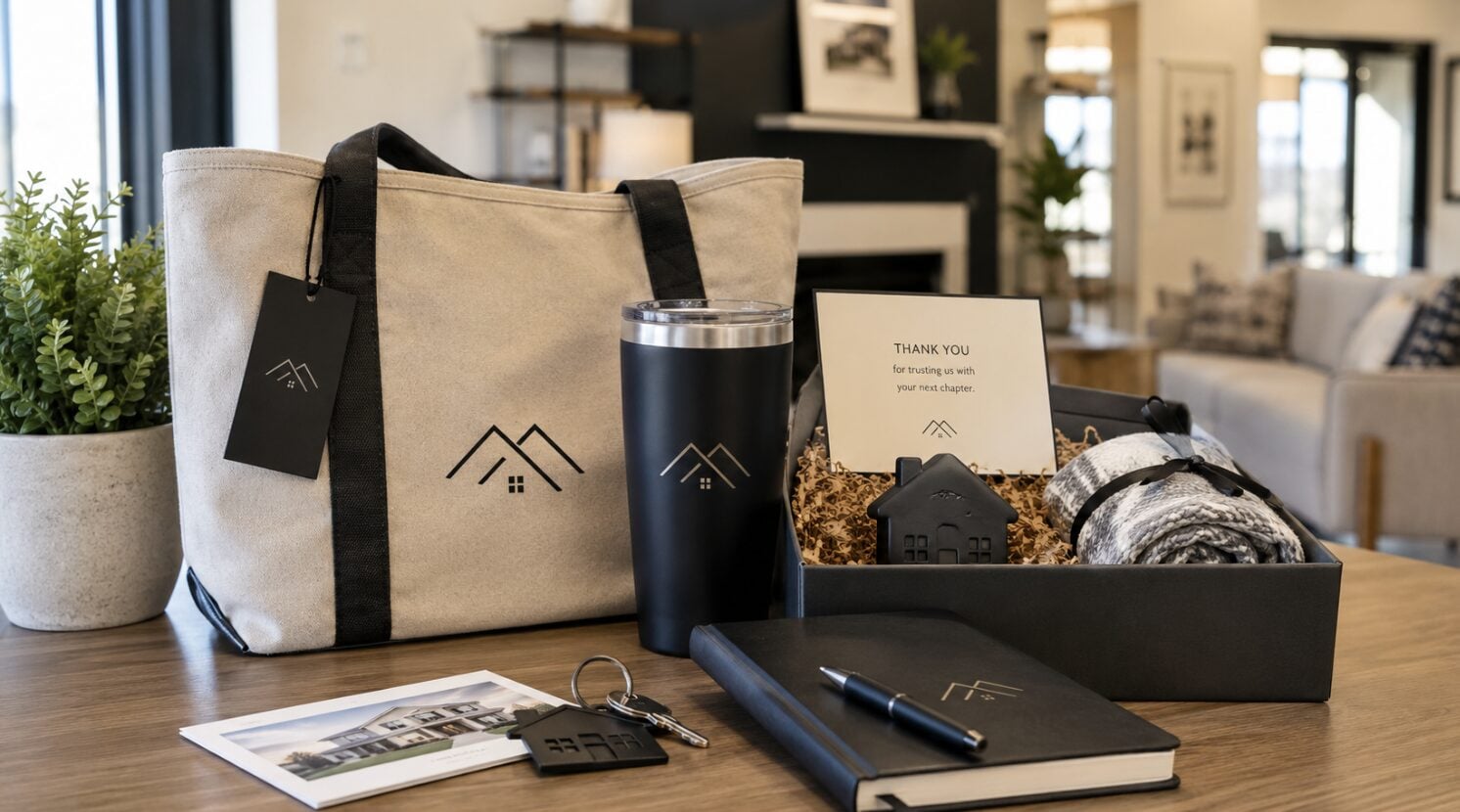
This one gets underestimated. A small, useful, quality branded item — a nice pen, a candle, a locally relevant product with your branding on it — left at the appointment creates a lingering physical presence in their home while they’re deciding. It’s not about spending a lot. It’s about being memorable when you’re not in the room. The psychology here is real: physical objects create emotional anchors in a way that emails and follow-up texts simply don’t. If you want a deeper look at the strategy behind why this works, the complete guide to branded merch for realtors and real estate teams covers the whole approach in a way that’s actually practical, not theoretical.
Your Business Card — But Make It Worth Keeping
A thick, well-printed business card with a clean design communicates something about you. A flimsy one communicates something else. This is not the place to cut corners. Matte finish, heavier card stock (at least 16pt), and a design that matches your overall brand aesthetic. Put it in the folder and also hand one directly to each person in the room. If there are two decision-makers — and there usually are — make sure both of them have one in their hand before you leave.
A Follow-Up System Baked In
Your kit isn’t done when you walk out the door. What happens in the 24 hours after the appointment matters just as much as the appointment itself. Build a follow-up note into your system — a handwritten card is ideal, but at minimum a personal, non-templated email that references something specific from the conversation. Sellers talk to each other. They’re at a dinner party the next week telling another homeowner about the agents they interviewed, and the one who sent a handwritten note after gets mentioned. The one who sent a generic drip email does not.
A listing appointment kit isn’t a gimmick. It’s the physical representation of your professionalism, and in a business where trust is the entire product, showing up prepared and polished is one of the most leveraged things you can do. Build the kit once, refine it over a few appointments, and then stop winging it. The sellers who hire you will know the difference — even if they can’t quite explain why.





0 Comments